
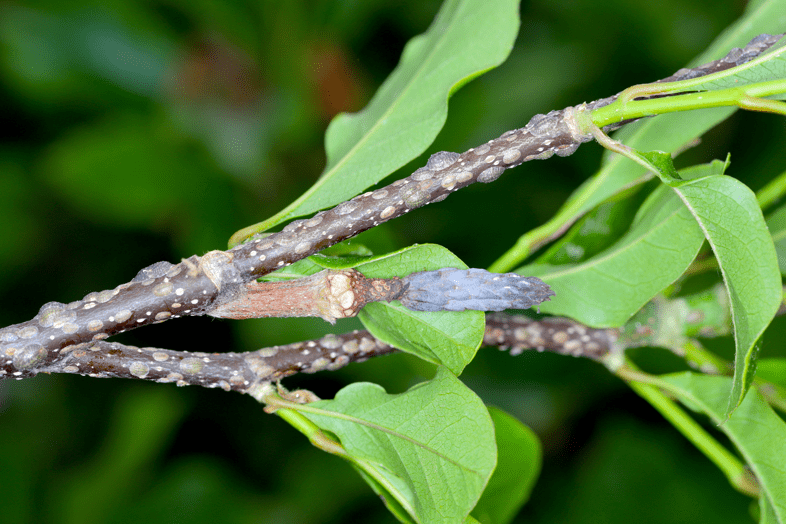
Scale insects are tiny and elusive pests that can easily go unnoticed but can have a major impact on the health of your trees. These troublesome pests attach themselves to branches, leaves, and stems of trees, shrubs, and other plants, feeding on sap and weakening a plant or tree over time. If left unchecked, scale infestations can cause major problems that can seriously affect the health and appearance of your landscape and even cause the death of shrubs and trees.
In many cases, scale infestations can be difficult to treat unless comprehensive measures are taken that address both the pest and the underlying health issues that attract it. In this article we will go into some detail about scale insects, giving you some tips on identifying them, recognizing the conditions that promote their development, and understanding best management strategies to control these problematic pests.
What is tree scale?
Tree scale refers to a group of insects that often look like tiny bumps or irregular raised patches on the bark, branches, or leaves of trees and shrubs. They frequently blend in with the color and form of the stems and foliage that they feed on, which makes them hard to detect until damage has occurred.
As they mature, scale insects typically settle in one place and immobilize. They can range in color from white, brown, gray, or even pink and orange, depending on the species. Their outer covering protects them from predators and environmental hazards, making these pests a formidable challenge to remove.
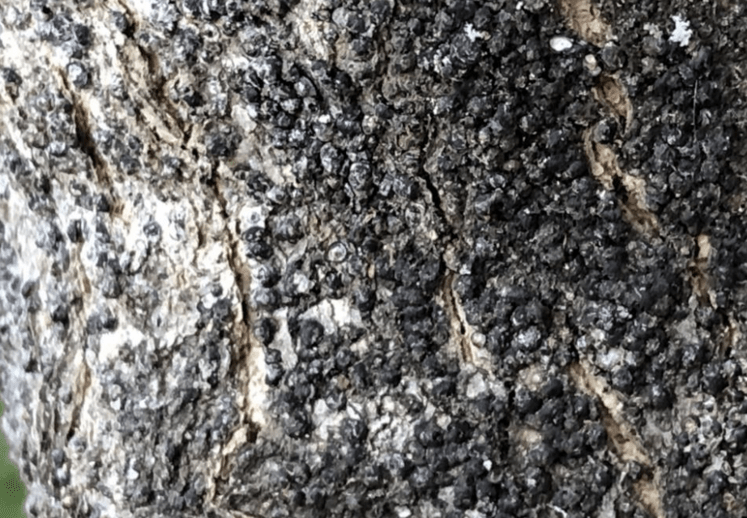
Gloomy Scale, an armored scale covering the bark of a red maple
Types of Scale Insects
Scale insects are divided into two main categories: armored scale and soft scale. Armored scales tend to be very small and are protected by a tough, shell-like covering that shields their bodies, making them difficult to remove and harder to spot on tree surfaces. In contrast, soft scales feature a waxy coating and are generally larger, which makes them easier to identify on branches and foliage.
Although both armored and soft scales feed on plant sap, their life cycle timing and response to control methods can differ. As a result, accurately identifying the type of scale present on a tree or shrub is essential for selecting the most effective treatment plan.
Tree Symptoms and Damage
There are a number of signs and symptoms that indicate the presence of scale insects. Tree and shrub symptoms include yellowing or browning leaves, premature leaf drop, stunted growth, and twig or branch dieback.
In addition, soft scale species produce a sticky residue known as honeydew on leaves or surfaces beneath the tree, which can attract ants and promote the growth of black sooty mold. Many scale insects reproduce so prolifically that they can cover and alter the color and appearance of the bark of tree trunks and branches.
In addition to visual cues, a notable symptom of damage is the decline in the overall vigor of the tree, resulting in reduced foliage density or slower overall growth rates. Over time, with repeated infestations, the tree may appear weak or sparse, and in severe cases, extensive infestations can lead to the death of larger branches or the entire tree.
Understanding scale life cycles is key to effective treatment
Once a scale infestation has been correctly identified, understanding its lifecycle is critical to prescribing effective treatments that target the insect in all of its life stages.
Scale insects generally begin their life cycle as eggs, which are laid by adult females under their protective covering. In some cases, eggs may be laid inside a sac made of secretions of fluffy cotton like wax.
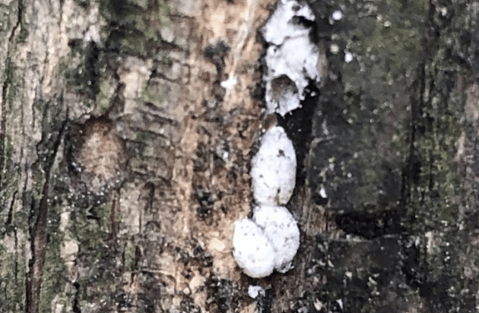
Cottony egg cases of Crape Myrtle Bark Scale
After hatching, the young nymphs, known as crawlers, are the only mobile stage and move around until they find a suitable spot to settle. Once they've attached, they start feeding and gradually develop their protective shell, becoming increasingly difficult to control.
Depending on the species and environmental conditions, a scale insect’s life cycle may take several weeks to months. Some species produce multiple generations per year, which can lead to rapid population growth if not managed.
Understanding these stages is essential for timing intervention, as some treatments are more effective when targeted at the vulnerable crawler phase before the insects become shielded by their hard coverings.
Early detection is key to effective management
Recognizing the early signs of scale activity is essential for effective management.
If you suspect your tree may be infested with scale insects, the first and most important step is to carry out a comprehensive inspection. Early detection is key, as scale insects are often small and difficult to spot, particularly during the initial stages of infestation. These insects can multiply quickly and can spread throughout the canopy and even move to nearby trees and shrubs if not managed in time.
Trust a Monster Arborist to find and effectively treat scale
Because scale pests may not be visible to an untrained eye, it is highly recommended to schedule a visit from your Monster arborist if you suspect scale issues with your trees and shrubs. Our experienced and qualified arborists can accurately diagnose scale problems and develop a targeted treatment plan that both addresses the infestation effectively and protects the health of your trees.
Effective management strategies take a multipronged approach
Integrative Tree and Shrub Health Care helps trees ward off scale attacks and prevent future infestations.
Supportive care is key to overcoming scale attacks
Effective scale treatment starts with addressing the underlying health issues of the tree, as this pest generally targets trees and shrubs that are under stress. This occurs especially in cases caused by drought and poor soil health.
When combating scale attacks, supportive care is critically essential to tree recovery. Because reinfestations of scale are extremely common, any effective treatment plan must address not just the pest, but the underlying stresses that are attracting the insect.
Monster’s Soil Health Program is an ideal holistic solution for combatting the stress factors that contribute to scale infestations.
Targeting scale with comprehensive treatments backed by scientific research
In addition to supportive care, Monster employs a comprehensive arsenal of treatments that effectively target scale infestations at every life stage and level of severity. Control options range from holistic products to systemic treatments that address more severe issues, especially in large trees. Our overall approach to scale treatments is backed by scientific research, giving your trees and landscape a decisive advantage to overcome this difficult pest. Through these combined strategies, your trees and landscape will be better equipped to recover from scale attacks and resist future infestations, promoting long-term health in your trees and resilience in your landscape.
Schedule a Spring Inspection and Tree and Shrub Health Care
Scale attacks are tough to control and can recur season after season. Signing up with Monster’s renewable Tree and Shrub Health Care Program will ensure that the trees and shrubs on your property receive regular monitoring and prompt action. Acting early will help limit the impact of these harmful pests - and preserve the health and beauty of your landscape for the long term.
Now is the time to top scale attacks early before they become difficult and costly problems later – Call your local Monster Tree Service today!