
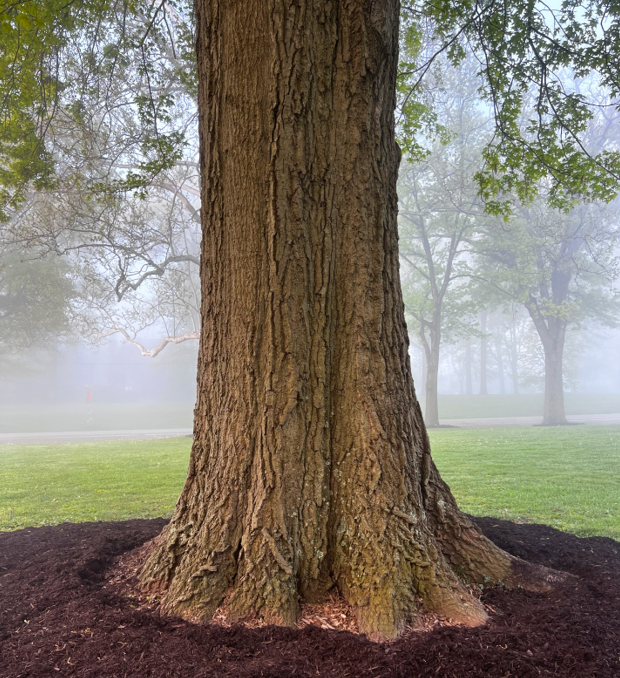
Spring is finally here! After months of cold weather, it’s time to get outside and show some love to our trees and yards. One of the best spring chores that gives your yard a big “WOW” factor is spreading a fresh layer of mulch around your trees, shrubs, and garden beds.
Nothing gives your yard an instant makeover like mulching. But putting down a fresh mulch layer is not just about beautifying your yard. When done right, mulch is a game-changer for keeping your trees and landscape plants healthy and prepared for the hot summer weather ahead.
Good mulching is a whole lot more than just good looks. The way you mulch actually matters a lot for the health of your trees. When put down the wrong way, mulch can cause significant problems - especially for trees - and may cause costly trouble down the road. In this article, we’ll share some simple mulching tips so you can make your yard look amazing while keeping your trees in tip-top shape.
Mulching Benefits
Using mulch around your trees and shrubs offers a wide range of advantages, especially when you choose natural materials like woodchips, shredded bark, or pine needles. In landscaping, mulch serves as a substitute for the leaves, twigs, and plant debris that in nature would fall on the forest floor.
In the woods these naturally occurring materials would then decompose in soil and be recycled over time as available nutrients to trees and plants. By replicating this natural process, mulch helps sustain soil in a similar way that keeps trees and woody plants healthy.
Here are some key benefits of mulching:
- Mulch helps retain moisture in the soil, preventing your trees from drying out during hot weather.
- It keeps the soil around tree roots cool throughout the summer and protects roots from freezing temperatures in winter.
- A mulch layer blocks and prevents weeds from germinating and establishing.
- Mulch restores organic matter and nutrients to the soil as it breaks down.
- It relieves soil compaction, allowing roots to grow more easily and have better access to water and oxygen.
- Mulch creates a protective barrier that shields tree roots from damage caused by landscape equipment, lawn mowers, and string trimmers.
Too much of a good thing can cause a lot of problems
Despite its benefits, when it comes to mulch, more isn't always better - and putting down too much mulch can stress and even harm your trees.1 Especially when piled high against tree trunks, excessive mulching can lead to:
- Circling or girdling roots that may wrap around the bottom of the tree, constricting its growth and restricting the movement of water and nutrients up into the canopy
- Introducing root, bark, and trunk rot
- Attracting pests and diseases
- Restricting air and water flow into soil, suffocating and dehydrating trees.
- Negative impacts on overall growth and health
Proper mulching lets your trees breathe, have access to water and nutrients, and grow strong - and it protects them from unnecessary stress. With a little TLC and attention to detail, you can keep your trees and yard looking great - and staying healthy - by using just the right amount of mulch.
Doing it right
In general, all you need for mulch to work its magic is a layer that’s about two to four inches deep. When putting down mulch, it’s also better if it’s pulled a few inches away from the tree’s trunk, as well as keeping it away from the stems of shrubs and other woody ornamentals.
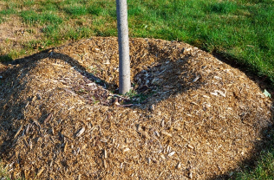
A tree with an excessive “mulch volcano”
Avoid the mulch volcano
The so-called "mulch volcano" occurs when mulch is piled high against the trunk of the tree in a high mound, resembling a volcano. While it might look tidy at first glance, this practice can be very harmful.
Excessive mulch that is laid too heavily may suffocate tree roots and hold moisture against the trunk. This can lead to decay, pest infestations, and even the development of girdling roots that choke off the tree's vital systems.
To avoid this, always spread mulch in a flat, even layer around the base of your tree, leaving soil exposed directly around the trunk. Be careful not to cover the tree's root flare, the star-shaped area at the bottom of the tree, where the trunk meets the main roots.
Ideally what you want to create around the tree is a wide, flat "doughnut" of mulch rather than a volcano. This will allow your trees to thrive while still looking dressed up and well-cared for.
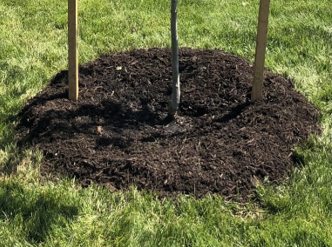
Proper tree mulching with a flat “doughnut” ring
Follow the 3-3-3 Rule
Especially for newly planted trees, a great rule of thumb to follow is something called the 3-3-3 Rule.2 This mulching method will help retain optimal moisture, block weeds, and prevent root and trunk damage - while still encouraging healthy roots and promoting healthy tree growth.
Three things to remember are:
- Apply a layer of mulch that is three inches deep around the base of the tree. This depth is ideal for conserving soil moisture and suppressing weeds while allowing for air and water to penetrate so the tree can breathe and access moisture.
- Make sure to keep the mulch three inches away from the tree trunk. By leaving this gap, you prevent moisture from accumulating against the bark and reduce the risk of rot and pest problems.
- Create a mulch circle with a radius of three feet. This wide area offers plenty of protection for the tree’s roots, while promoting outward root growth that is healthier for the tree.
You can adjust the mulch radius for tree size
While generally going wider is better, the radius rule for mulching can be adapted depending on the size of your tree. For smaller saplings, a mulch circle with a smaller radius (about a foot and a half) is sufficient as long as it remains visible and still protects the tree.
Larger mature trees can benefit from a wider mulch ring with a radius of six feet or more. Ideally, if possible, mulch may extend to the drip line of the tree’s canopy, which is the area directly beneath the outermost branches. Going wide with the ring is not problematic - as long as the mulch layer does not go too deep.
Mulch and Monster’s Soil Health Program: A Dynamic Duo for Healthy, Beautiful Trees
When done right, mulching offers so many amazing advantages for tree health – and these benefits can be further amplified when combined with Monster Tree Service’s Soil Health Program. This program is specifically tailored to maintain the health of trees - and it is especially designed to address situations where trees are stressed due to drought, compacted soil, or nutrient deficiencies.
By restoring the vital biological components within your tree’s soil, Monster’s Soil Health Program can compound the benefits that result from mulching applications and play a crucial role in maintaining and improving tree health and vitality. By integrating the best mulching techniques with our Soil Health Program, you can optimize the positive impacts of both practices and support your tree’s long-term health.
Schedule Your Soil Health Program Treatment This Spring
As spring sets in and the temperatures begin to rise, now is the perfect time to take proactive steps for your trees and shrubs. Reach out to your local Monster Tree Service to schedule Soil Health Program treatments for your trees and property.
Your trees will benefit from our expert tree care, and you'll enjoy a healthier, more vibrant landscape. Call us today - your trees will thank you!